
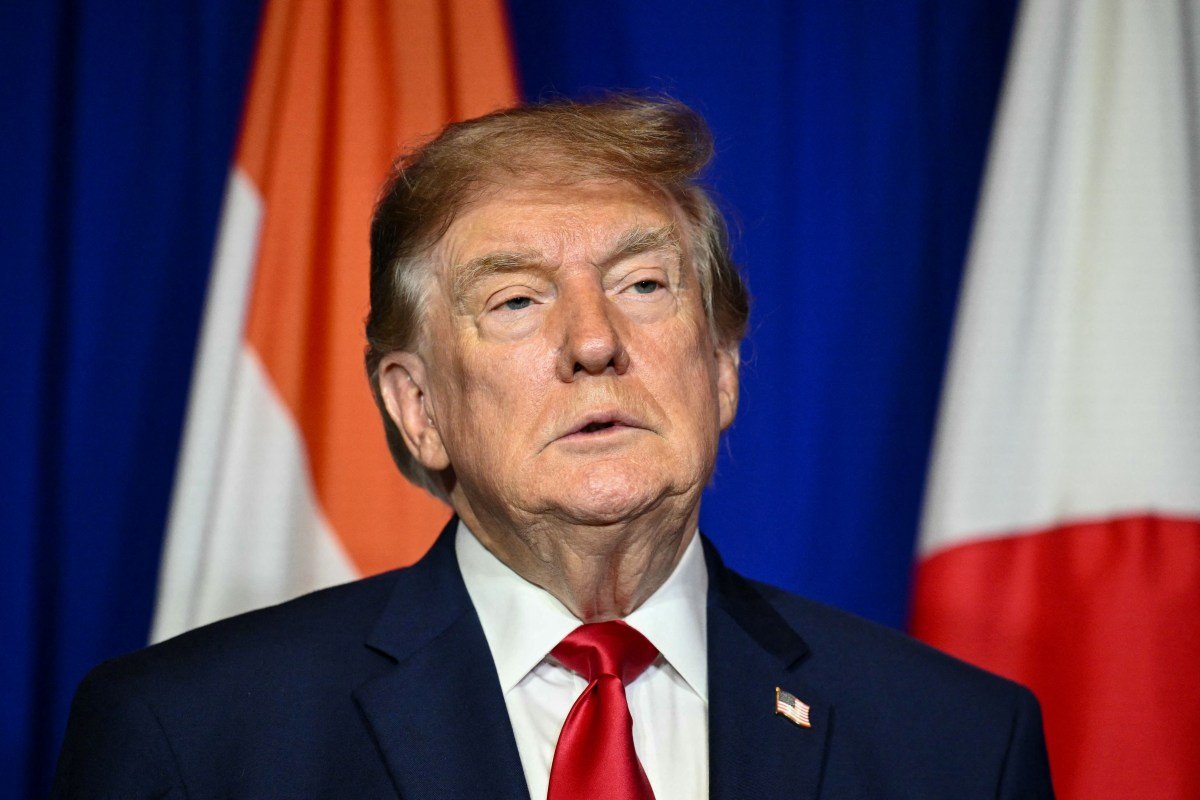
President Donald Trump has proposed restrictions on American companies building artificial intelligence (AI) data centers abroad, signaling a shift in U.S. technology investment policy. During a recent White House press conference, Trump stated, “We’re not going to allow companies to build data centers in other countries,” and indicated that significant taxes would be imposed on those that do.
Proposed Restrictions on AI Data Centers Abroad
Trump’s announcement aims to maintain U.S. dominance in AI and prevent companies from relocating critical infrastructure overseas, particularly to countries like China. He specifically mentioned a planned data center in Finland, asserting that his administration would block its development. The president did not provide details on how the proposed taxes would be implemented or which companies would be affected.
The administration’s interest in curbing overseas data center construction stems from concerns about national technological sovereignty. As AI becomes increasingly vital to economic productivity and national security, the location of data centers is viewed as strategically important. The proposed restrictions could lead to significant operational adjustments for multinational technology firms involved in cloud computing, AI development, and semiconductor manufacturing.
Implications for the Technology Sector
The potential limitations on international expansion may complicate U.S. companies’ ability to efficiently serve global markets. Industry leaders, including Josh Levi, president and CEO of the Data Center Coalition, emphasized the importance of domestic investment, noting that their members are contributing hundreds of billions of dollars to build critical digital infrastructure in the U.S. This investment supports over 5.5 million American jobs and is essential for maintaining the country’s competitive edge in technology.
As the administration continues to deliberate on the specifics of this policy, uncertainty remains within the business community. Key questions include whether the restrictions will apply universally or target specific regions, and whether exemptions will be made for allied nations. Stakeholders are preparing for upcoming policy discussions, recognizing the need for early engagement to influence regulatory outcomes.
The administration has yet to clarify implementation timelines or whether Congressional action will be necessary to enforce these proposed restrictions. As discussions progress, further details are expected to emerge regarding the regulatory framework surrounding AI data centers and international technology investments.