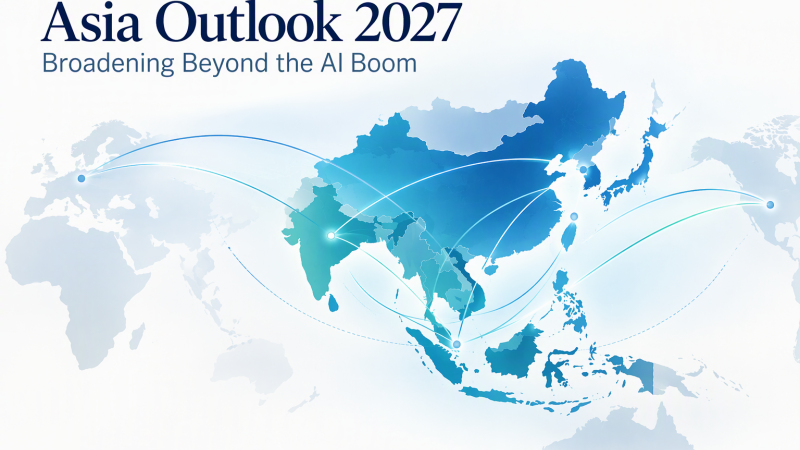
Asian economies are projected to experience a slowdown in GDP growth in 2027, following a robust performance in 2026. According to Think ING, growth excluding China is expected to decline to 3.8 percent from 4.5 percent in the previous year, as the impact of artificial intelligence (AI) on economic expansion moderates and global financial conditions tighten.
Strong Growth in 2026 Driven by Exports and Investment
In 2026, Asia’s GDP growth exceeded expectations, largely driven by strong export performance and investment activity, particularly in technology and infrastructure. South Korea, Taiwan, and Singapore were notable beneficiaries, significantly surpassing consensus growth forecasts. However, Indonesia and the Philippines struggled with subdued household consumption and political uncertainties affecting government spending.
India’s Robust Performance Amid Challenges
India achieved a remarkable year-on-year growth rate of 8.2 percent in the first half of 2026, supported by structural reforms and public capital expenditure, despite facing higher energy import costs. This positions India favorably as the AI-driven economic cycle normalizes, while it remains less exposed to potential corrections in the tech sector.
Mixed Signals in Trade and Consumption
While Asian economies are expected to contribute significantly to global trade growth for the third consecutive year, forecasts suggest a gradual moderation in trade volume growth in 2027. Recent data indicates mixed signals, with some softening in semiconductor export growth in Japan and Taiwan, although strong gains continue from Korea and China. Consumption patterns in Japan are improving, supported by rising wages and a shift towards financial market participation.
As the effects of monetary tightening take hold, growth in developed Asian economies, particularly Korea and Australia, may slow more than in their developing counterparts. The Philippines’ growth challenges are anticipated to be temporary, while Singapore is expected to maintain resilient consumption growth due to strong foreign direct investment and ongoing benefits from the AI investment cycle.