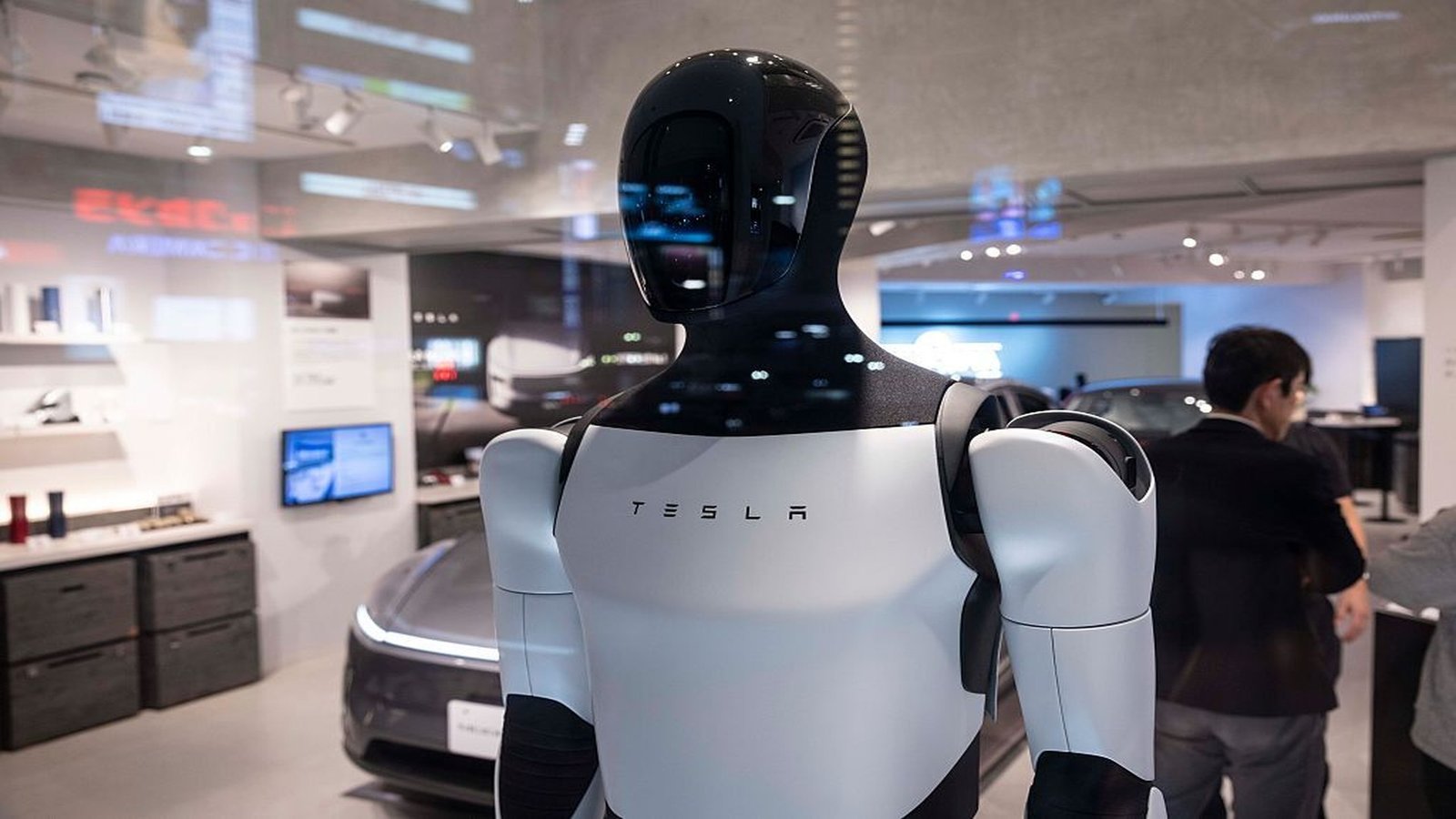
Tesla’s humanoid robot, Optimus, is set to begin its role in factory work, with expectations for deliveries to industrial customers by the end of 2027. During a recent demonstration in Austin, Texas, Optimus successfully handed out snack packets, although it was operated remotely. The company aims for the robot to eventually perform repetitive and hazardous tasks in factories, with CEO Elon Musk suggesting that some units are already engaged in basic tasks within Tesla’s production facilities.
Tesla’s Plans for Optimus in Industrial Settings
Optimus is designed to take on jobs that are either monotonous or pose risks to human workers. Musk indicated that the robot could handle tasks that require continuous operation, such as moving parts between workstations. The controlled environment of a factory is seen as ideal for the robot’s initial deployment, as it can repeat tasks with precision. However, challenges remain, particularly in adapting to unexpected changes, such as items being out of place.
Future Applications in Household Chores
While factory work is the immediate focus, Tesla envisions a future where Optimus could assist with household chores. Musk noted that achieving the dexterity needed for tasks like laundry—where the robot must sort and fold various garments—will take time. The robot’s hands and software require further development to handle different shapes and sizes of objects and to respond effectively when tasks do not go as planned.
Background on Tesla’s Robotics Initiatives
Tesla has been working on the Optimus project as part of its broader goal to integrate advanced robotics into its operations. The company has started early production of the humanoid robot in Fremont, California, and is gathering data from human workers to enhance Optimus’s capabilities. Future demonstrations are expected to showcase the robot performing unscripted tasks, which will be crucial for its development.
As Tesla continues to refine Optimus, the focus remains on ensuring the robot can operate safely and effectively in both industrial and domestic environments.